
Choosing a print method can decide whether a new shirt drop earns a profit or becomes a slow, expensive production problem. For small brands, Etsy sellers, school programs, and local print shops, DTF transfers vs screen printing usually comes down to order size, art complexity, garment mix, and delivery deadline.
Neither method wins every job. DTF gives us full-color flexibility with little setup, while screen printing remains a powerful production method for larger runs of simple artwork. The smartest apparel creators choose the method that matches the actual order instead of forcing every job through one workflow.
The Quick Answer for Apparel Orders
DTF is usually the better fit for short runs, detailed art, personalized garments, and mixed-fabric orders. Screen printing usually becomes more efficient when the same simple design is needed across a large quantity of shirts.
| Decision Point | DTF Transfers | Screen Printing | Best Fit |
|---|---|---|---|
| Setup work | Minimal | Screens and separations | DTF for short runs |
| Color detail | Full color, gradients, photos | Strong spot colors | DTF for complex art |
| Per-piece cost | Predictable at low quantities | Drops at higher volumes | Screen print for repeats |
| Fabric range | Cotton, polyester, blends | Broad, ink-dependent | DTF for mixed garments |
| Production speed | Press-ready transfers | Fast after setup | Depends on quantity |
How DTF Transfers and Screen Printing Work
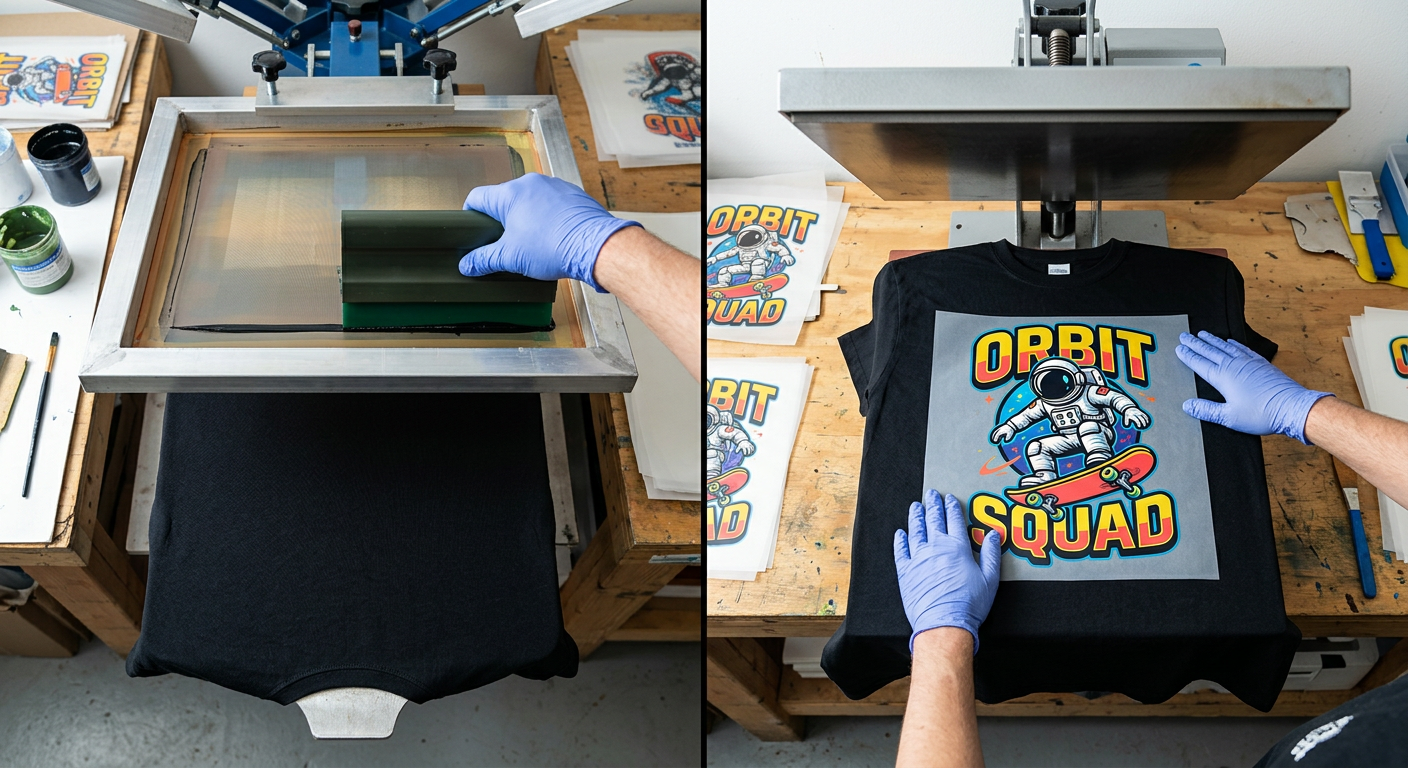
DTF applies a finished design with heat, while screen printing pushes ink through a prepared mesh screen directly onto the garment. That process difference changes the cost structure, production pace, and type of artwork each method handles best.
DTF Transfers: Printed First, Pressed When Needed
DTF, or direct-to-film, starts with artwork printed onto coated film. Adhesive powder is applied and cured, then the finished transfer is heat-pressed onto the garment. There are no screens to coat, expose, reclaim, or store for each design.
That low-prep workflow makes DTF practical for one shirt, 12 team names, 25 full-color event tees, or a small batch of varied Etsy orders. It also handles detailed graphics, gradients, small text, and photographic elements without charging more simply because the art has more colors.
For dependable application, follow proven DTF heat press settings and troubleshooting steps. A consistent press matters as much as the transfer itself. Heat, pressure, pre-press time, peel temperature, and final press all affect adhesion and finish.
Screen Printing: Built for Repetition
Screen printing uses a mesh screen and stencil for each ink color. Ink is pushed through the screen onto the garment, often with flash drying between colors, then cured for durability.
This method requires more preparation, but it rewards stable production. If a customer wants hundreds of the same one-color or two-color logo on the same shirt style, the setup work is spread over many units. That can make the cost per shirt very competitive.
Screen printing also remains a strong choice for specialty effects such as high-density ink, puff ink, discharge work, and exact spot-color systems. It is not outdated. It is simply more selective about the jobs where it delivers the strongest value.
Cost: Where Each Method Makes Financial Sense
DTF protects cash flow on short runs because it avoids per-color screen setup. Screen printing can win on unit economics when a high-volume order uses simple, repeatable art.
For a small business, the real cost is not only the price printed on an invoice. It includes setup time, artwork separations, spoilage risk, storage, labor, blank-garment variety, and the cost of producing inventory that may not sell.
DTF Costs for Small Batches
DTF is often the cleaner financial choice when you need one-off samples, preorders, personalized names, or multiple designs within the same collection. You can order only what you need, then apply transfers as garments sell.
That is especially useful for creators testing new designs. Instead of committing to 100 shirts before knowing which graphic will move, you can press a small launch batch, collect feedback, and reorder the winners. No-minimum DTF prints reduce the pressure to guess demand perfectly.
Screen Printing Costs for Repeat Orders
Screen printing starts with setup costs that increase with color count. Once screens are built and the press is running, however, a simple artwork file repeated across a larger quantity can become less expensive per shirt than individual transfers.
There is no universal break-even number. A one-color chest logo may favor screen printing at a much lower volume than a six-color illustration. Ask for quotes based on the exact art, ink colors, garment type, print locations, and quantity you actually plan to sell.
Speed and Flexibility for Small Apparel Brands
DTF is built for fast design changes and short production cycles. Screen printing shines when artwork is locked, quantities are high, and the production schedule supports setup time.
In a 2024 PRINTING United Alliance State of the Decorated Apparel Industry report, respondents expected digital technologies to account for 47.1% of apparel decoration by 2026, up from 33.4% in 2024. That shift reflects why on-demand workflows matter to sellers who need more flexibility, not just more volume.
When DTF Saves the Day
We recommend DTF for a product sample, a late sponsor addition, a small event order, a full-color brand launch, or apparel that mixes cotton, polyester, and blends. You can keep the artwork digital, make a correction without remaking screens, and press compatible designs onto different garment colors as orders come in.
Five Star DTF gives Arizona apparel creators a press-ready option for urgent work, with same-day printing and shipping for qualifying orders, no minimums, and local pickup in Tempe. That helps shops in Phoenix, Scottsdale, Mesa, Gilbert, Chandler, and beyond keep momentum when an order cannot wait through a long setup cycle.
When Screen Printing Moves Faster
Once a screen-print job is prepared, the press can move quickly through a large run of the same design. That is why screen printing remains a practical choice for festival merch, company uniforms, school spirit shirts, and recurring promotional orders where the art will not change.
The tradeoff is lead time before production starts. Any artwork revision, color change, or late personalization can add work. For businesses selling personalized products or limited-edition drops, that rigidity can create more friction than savings.
Print Quality, Feel, and Durability
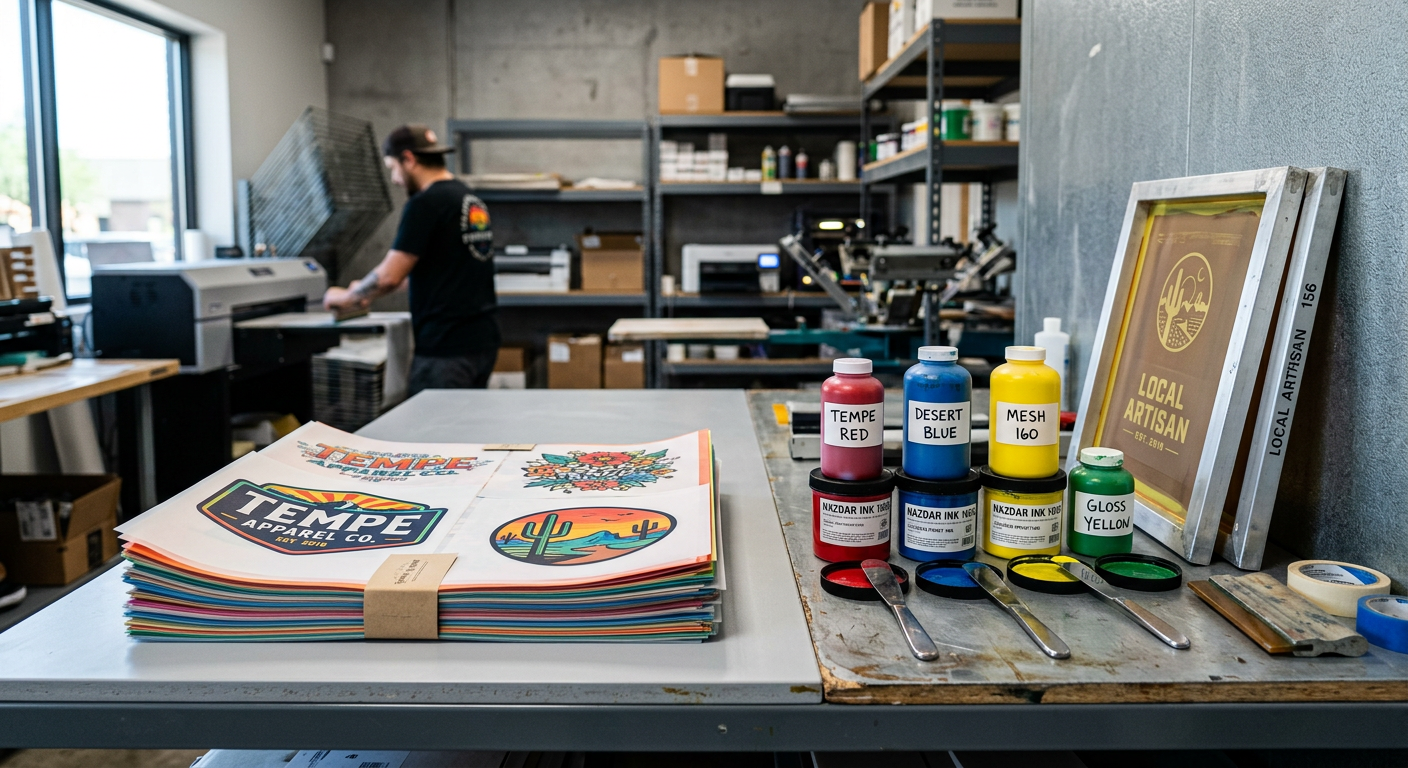
Both methods can produce durable apparel when the process is done correctly. The better choice depends on the desired finish, design style, garment material, and quality control behind the job.
Color and Artwork Detail
DTF excels at full-color artwork, fine details, gradients, and small lettering. It is a strong option for illustrated tees, colorful logos, photo-style designs, and designs that would otherwise require multiple screen separations.
Screen printing excels at bold spot colors, opaque coverage, and iconic graphic looks. A clean one-color design on a quality shirt can look sharp, rich, and highly retail-ready. With an experienced printer, specialty inks can add texture and effects that make a simple design stand out.
Hand Feel and Stretch
A well-applied DTF transfer creates a flexible printed layer that stretches with the garment. Large solid areas may feel more noticeable than a lightly inked screen print, so consider reducing oversized blocks of color when a softer hand is the priority.
Screen printing can feel exceptionally soft with the right ink system, garment, and technique. It can also feel heavy if thick layers of plastisol are used. Do not judge either process by the method name alone. Request a physical sample when hand feel is central to your brand.
Fabric Compatibility
DTF transfers for T-shirts, hoodies, polyester performance gear, and blended apparel simplify mixed-garment orders. This flexibility is valuable for brands offering the same art across adult tees, youth shirts, sweatshirts, and athletic fabrics.
Screen printing also works across many fabrics, but polyester and specialty garments may require appropriate inks, low-bleed systems, and controlled curing. A knowledgeable screen printer will account for dye migration, fabric texture, and garment color before production begins.
A Smarter Day-Five Production Plan
By the fifth day of a launch cycle, we should know which designs earned attention and which need refinement. That is the point where DTF and screen printing can work together instead of competing for every order.
Use DTF early in the cycle for samples, mockup validation, influencer seeding, preorder fulfillment, and small runs with multiple graphics. Track the designs customers actually buy, the garment colors they choose, and the sizes that move fastest.
Then move proven artwork into screen printing when the sales pattern supports a larger repeat run. For example, a four-color graphic with 20 preorder sales is still a DTF job. The same art reordered at 250 units on a single cotton tee becomes worth pricing as a screen-print run.
This approach reduces dead inventory and lets us protect margins without slowing creative testing. It also gives growing apparel brands a realistic path from low-risk product experiments to scalable production.
Beyond Shirts: Choose the Right Decoration Tool
Fabric transfers and hard-surface decals solve different problems. Using the wrong product creates avoidable failures, no matter how good the artwork looks.
Use apparel DTF for shirts, hoodies, tote bags, and fabric goods that can handle a heat press. For tumblers, glass, plastic packaging, metal, and other smooth hard surfaces, use durable custom UV DTF stickers instead. UV DTF decals are peel-and-stick, so they are not designed for fabric garments or heat pressing.
For apparel that needs a retail-ready shimmer, custom glitter DTF transfers add sparkle without the cutting and weeding required by glitter vinyl. For large repeat runs of a simple glitter graphic, specialty screen-print inks may still be worth comparing.
Frequently Asked Questions
Is DTF better than screen printing for one shirt?
Yes, DTF is normally the better choice for one shirt because it avoids screen setup and supports full-color artwork. It is also easier to use for samples, birthday shirts, personalized apparel, and test launches.
How many shirts do we need before screen printing costs less?
There is no fixed quantity because color count, print size, garment type, and setup fees all matter. Screen printing becomes more attractive as quantities rise and artwork stays simple, but a detailed multicolor design can keep DTF competitive well beyond a small run.
Can DTF transfers go on polyester shirts?
Yes, DTF works well on polyester, cotton, and many blends when pressed with the correct settings. Always test sensitive performance fabrics first, especially garments with moisture-wicking finishes or a risk of dye migration.
Does screen printing last longer than DTF?
Both can last through repeated wear and washing when produced and applied correctly. Screen printing has a long durability record, while quality DTF transfers can also resist cracking and peeling when the garment is pressed, peeled, and washed according to instructions.
Is screen printing better for a brand with a simple logo?
It can be. A stable one-color or two-color logo ordered in larger quantities is one of screen printing's strongest use cases, especially when you want consistent repeats on the same garment style.
Can we use DTF for a gang sheet with several designs?
Yes, gang sheets are ideal for combining compatible logos, left-chest prints, sleeve graphics, and small designs into one layout. This reduces unused space and gives small apparel shops more flexibility for varied orders.
Print the Right Method for the Order
DTF and screen printing are not rivals in a one-winner contest. DTF is the agile option for full color, low quantities, personalization, and fast changes. Screen printing is the production powerhouse for large, repeatable runs with simple art.
Start with the order in front of you. Look at quantity, artwork complexity, garment variety, desired finish, and delivery date. Once those factors are clear, the right production method becomes much easier to choose.
Get Press-Ready Transfers From Tempe
Need fast, professional transfers for your next apparel order? Order press-ready custom DTF transfers from Five Star DTF for premium color, no minimums, same-day printing and shipping for qualifying orders, plus free shipping on orders over $100.
Order online: https://fivestardtf.com/product/dtf-transfers/
📍 Local pickup: 305 S Rockford Dr Ste B, Tempe, AZ 85281
Summary
DTF transfers are the strong choice for small batches, full-color graphics, on-demand fulfillment, mixed fabrics, and quick production. Screen printing is often the better value for large quantities of simple, repeatable artwork. Build your workflow around the order size and design, then use both methods where they make the most business sense.
About Five Star DTF
Five Star DTF is Arizona’s leading provider of
DTF transfers, Glitter DTF prints, UV DTF stickers,
and Sublimation transfers, offering same-day printing, fast nationwide shipping,
and convenient local pickup in Tempe, Arizona.
We proudly serve Tempe, Scottsdale, Phoenix, Mesa, Gilbert, Chandler, and all of Arizona,
helping creators, apparel brands, small businesses, and print shops produce premium, press-ready transfers with
vivid color, soft stretch, and long-lasting durability.
There are no setup fees, no minimum orders, and turnarounds are always fast.
Our Top Products
- DTF Transfers
- Glitter DTF Transfers
- UV DTF Stickers
- Sublimation Transfers
- Press Instructions & Tips
- Contact & Local Pickup
Artwork Help
Need your artwork cleaned, fixed, resized, or made print-ready? We offer background removal, vectorizing, color correction, and gang sheet layout.
Ready to Print?
Order DTF Transfers or
Upload Your Artwork to get started today.
All orders over $100 ship free, printed in Tempe, AZ and shipped statewide and nationwide.