

A great shirt design should not sit in a folder while you wait for a complicated production run. It should be ready to press, photograph, list, and sell. That is why custom DTF transfers for T-shirts have become a practical option for apparel brands, Etsy sellers, event planners, and print shops that need detailed color without taking on the cost and maintenance of an in-house printer.
We see the same challenge every day: you may need one sample shirt for a product launch, 24 team tees for Friday, or a restock that cannot miss its shipping window. Direct-to-film printing keeps the workflow simple. You send press-ready artwork, receive the transfer, then apply it with a dependable heat press and the blanks you already use.
Why DTF Makes Sense for Modern Apparel Orders
The apparel market is built by small operators moving quickly. The U.S. Small Business Administration reports that the United States has 36.2 million small businesses, accounting for almost 46 percent of private-sector employment. For those businesses, avoiding excess inventory and expensive equipment is not a minor advantage. It is a better way to protect cash flow.
DTF gives you a press-ready route to full-color garments. Unlike traditional screen printing, you do not need a separate screen for every ink color. Unlike heat-transfer vinyl, you are not spending production time cutting and weeding intricate lettering, gradients, or photo-based art.
| Method | Best fit | Main advantage | Main tradeoff |
|---|---|---|---|
| DTF transfers | Full-color apparel | Detail, flexibility, low quantities | Requires a heat press |
| Screen printing | Large repeat runs | Efficient at scale | Setup and color limits |
| Heat-transfer vinyl | Simple names and numbers | Easy for basic graphics | Cutting and weeding take time |
| Sublimation | Light polyester apparel | Very soft feel | Not suitable for cotton |
Where Custom DTF Transfers Perform Best
DTF prints for T-shirts work well on cotton, polyester, blends, nylon, and many stretch fabrics. That versatility matters when your store sells soft cotton tees one week and performance uniforms the next. A white underbase also helps bright artwork show clearly on dark garments.
The best use cases include:
- Brand merchandise with multiple colors or fine details
- Small-batch drops and test designs
- Staff uniforms, school apparel, and team orders
- Personalized names, numbers, and event shirts
- Cotton and polyester garments in the same order
- On-demand production for online shops
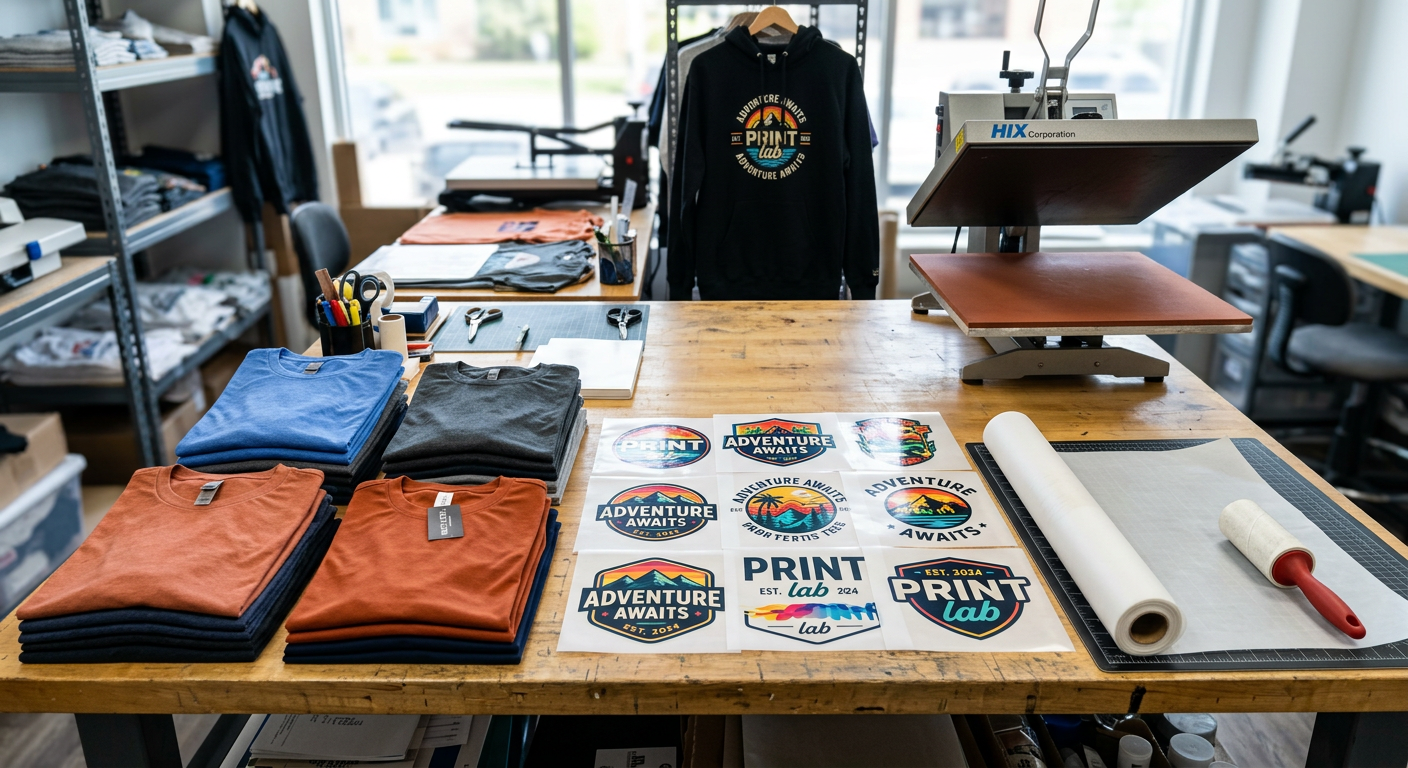
Custom DTF Transfers for T-Shirts: From Artwork to Finished Garment
The process is straightforward, but consistency comes from respecting the details. We recommend starting with clean artwork at the final print size. Transparent PNG, TIFF, EPS, and AI files are practical choices, and artwork should be high resolution so small type and outlines remain sharp.
Build Artwork That Presses Cleanly
Avoid relying on thin, low-resolution lines that may look fine on a phone but become soft at shirt size. Remove unwanted backgrounds before upload, double-check spelling, and make sure you have rights to every logo, illustration, or character in the file.
If the artwork needs help, use artwork and design services before ordering. Cleanup, vectorizing, background removal, and sizing support can prevent a rushed production day from becoming a costly reprint.
Choose the Right Print Size
A left-chest logo is commonly smaller than a full-front graphic, while youth garments need different proportions than adult XL shirts. Instead of using one size for every garment, map your transfer dimensions to the shirt and placement.
For a small apparel drop, order individual transfers when designs vary in size. A gang sheet can make sense when you have many small logos that nest tightly together, but an inefficient layout can waste film and slow down prep.
Press With Controlled Heat and Pressure
A heat press is the tool that makes DTF dependable. For standard transfers, a practical baseline is 300 to 325 degrees Fahrenheit with firm, even pressure for 10 to 15 seconds. Let the carrier cool fully before peeling, then add a short finishing press with parchment or a protective sheet if the transfer instructions call for it.
Every press, garment, and transfer can behave differently, so test a sample before committing to a large run. Follow the current DTF press instructions for the best settings and troubleshooting guidance.
How DTF Compares With Other Decoration Methods
Here is the thing: DTF is not automatically the best answer for every job. If you are printing hundreds of the same simple one-color logo, screen printing can be the more efficient production choice. If you are making a single name-and-number jersey, vinyl can still be useful.
DTF stands out when the artwork is colorful, detailed, variable, or needed in short runs. It is particularly strong for creators who want to test designs without ordering a deep inventory of preprinted garments. You can keep blank shirts on hand and press based on actual demand.
Standard DTF or Glitter DTF?
Use standard DTF when you want a smooth, vivid, flexible finish for logos, illustrated graphics, and everyday apparel. Choose Glitter DTF transfers when the design needs a more noticeable sparkle effect, such as dancewear, spirit shirts, boutique drops, holiday apparel, or youth styles.
Glitter film adds visual energy, but it has a more textured feel than standard film. It is a deliberate design choice, not a substitute for every logo.
DTF for Shirts, UV DTF for Hard Goods
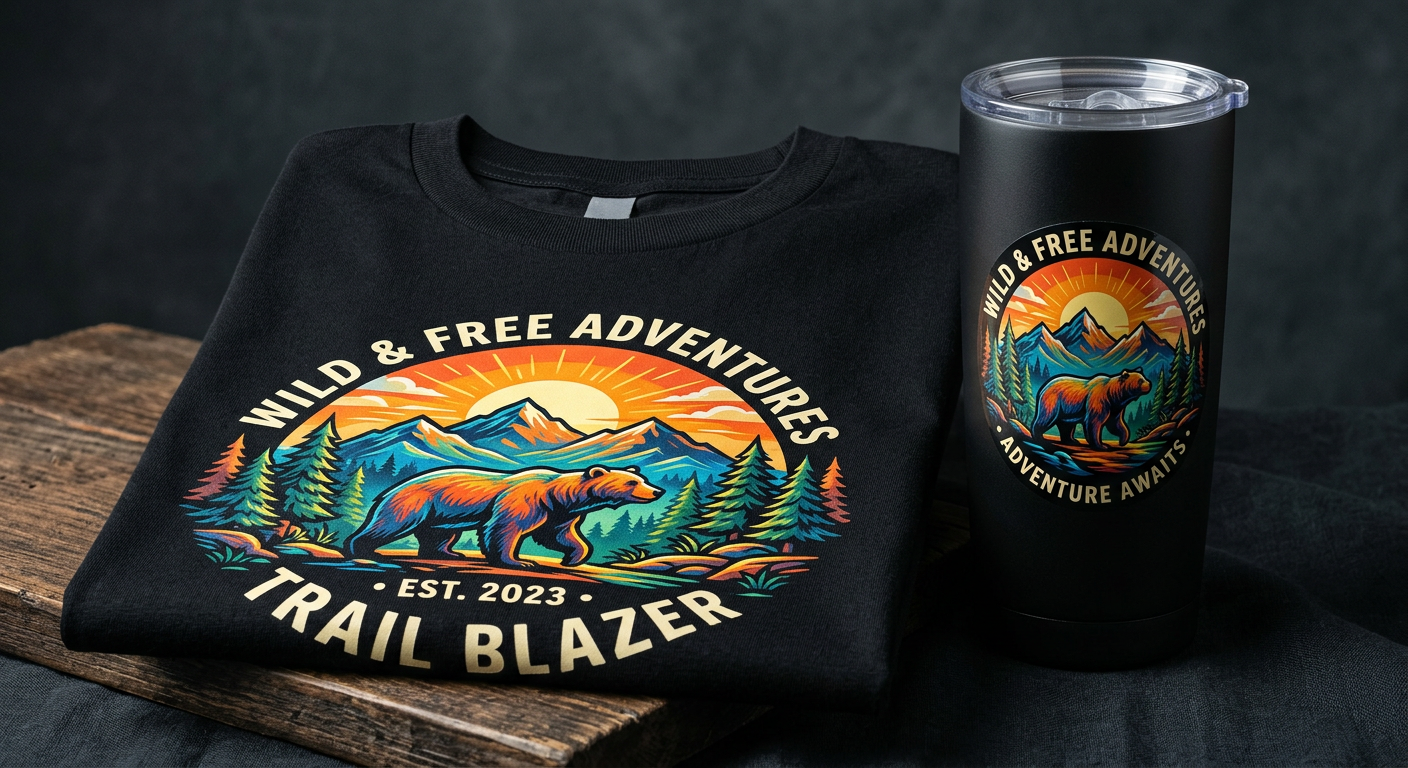
A common mix-up is treating UV DTF like an apparel transfer. Standard DTF is designed for heat pressing onto garments. UV DTF stickers are peel-and-apply decals for hard, non-porous surfaces such as tumblers, glass, metal, plastic, and packaging.
That combination can be powerful for a merch launch. You can sell a branded T-shirt, then add matching drinkware, shipping-box labels, or event giveaways without changing the visual identity.
Avoid These Common Pressing Mistakes
Most DTF problems are preventable. The transfer is only one part of the result, and a rushed press can undermine good artwork and good film.
Using Uneven Pressure
A household iron or a lightweight craft tool may not deliver reliable pressure across a full graphic. Use a heat press with a stable platen, then make sure seams, collars, pockets, and buttons are not creating an uneven surface beneath the print.
Peeling Too Early
If your transfer is specified as a cold peel, give it time to cool. Rushing this step can lift fine details or create uneven edges. Slow down for a few seconds now instead of remaking the shirt later.
Skipping a Test Press
Fabric blends, garment dyes, and heat presses vary. Press one sample, assess adhesion and finish, then start the production run. This is especially important for performance polyester, where heat marks and dye migration can be concerns.
Ignoring Garment Prep
Pre-press the shirt briefly to remove moisture and wrinkles. Use a lint roller, center the graphic carefully, and avoid pressing over seams whenever possible. Those small habits create a more professional finish.
Fast DTF Printing for Arizona Creators and Nationwide Orders
Speed matters when you are fulfilling a launch, replacing a damaged print, or preparing for a weekend market. Five Star DTF prints in Tempe and supports local pickup for customers in Phoenix, Mesa, Gilbert, Chandler, Scottsdale, and surrounding Arizona communities.
For ready-to-press DTF transfers, we offer no minimum quantities, no setup fees, same-day production options for qualifying orders, and free shipping on orders over $100. That gives you room to start with samples, fulfill a short run, or scale into repeat business without overcommitting to inventory.
Order Press-Ready Transfers From Tempe Today
When your artwork is ready, we are ready to print it. Order online through Five Star DTF for fast, professional DTF transfers, then press them onto the garments your customers already love.
Local pickup is available at 305 S Rockford Dr Ste B, Tempe, AZ 85281. Need help before placing an order? Reach our team through the contact page.
Frequently Asked Questions
What fabrics work with DTF transfers?
DTF transfers work on cotton, polyester, blends, nylon, spandex, canvas, and many other fabrics. This broad compatibility is one reason they are useful for mixed apparel orders.
Do we need a DTF printer to sell custom shirts?
No. You can order press-ready transfers, keep blank apparel in stock, and apply designs with a quality heat press. That approach removes printer maintenance, ink management, powder handling, and curing from your workflow.
What heat press settings should we use?
Use the instructions provided with your transfer as the final authority. For many standard DTF jobs, 300 to 325 degrees Fahrenheit, firm pressure, and 10 to 15 seconds is a useful starting point, followed by a cold peel.
Are DTF transfers durable enough for resale apparel?
Yes, when the transfer is properly printed, pressed, and washed according to care guidance. For the best garment life, wash inside out in cold water and use lower dryer heat.
Are gang sheets always cheaper?
No. Gang sheets are most useful when many small, different designs fit together tightly. If you need a few larger graphics or repeated designs in precise sizes, individual transfers may be easier and more cost-efficient.
Can we use one design on both cotton and polyester shirts?
In many cases, yes. DTF is a versatile option for cotton and polyester, but test pressing is still smart when fabric composition, garment color, or production conditions change.
The Smart Way to Grow a Shirt Line
Custom apparel does not need a warehouse full of slow-moving inventory or a printer that demands constant attention. With a reliable heat press, clean files, quality blanks, and custom DTF transfers for T-shirts, you can move from idea to finished garment with more control.
Start small, test your placement and press settings, then scale based on what your customers actually buy. Whether you are building an Arizona apparel brand or shipping merch nationwide, the best workflow is the one that keeps your production consistent and your turnaround fast.
Summary
DTF printing is a strong choice for full-color shirts, short runs, varied fabrics, and fast-moving merchandise. It reduces setup complexity while giving creators a professional, press-ready way to produce apparel on demand.
About Five Star DTF
Five Star DTF is Arizona’s leading provider of DTF transfers, Glitter DTF prints, UV DTF stickers, and Sublimation transfers, offering same-day printing, fast nationwide shipping, and convenient local pickup in Tempe, Arizona.
We proudly serve Tempe, Scottsdale, Phoenix, Mesa, Gilbert, Chandler, and all of Arizona, helping creators, apparel brands, small businesses, and print shops produce premium, press-ready transfers with vivid color, soft stretch, and long-lasting durability. There are no setup fees, no minimum orders, and turnarounds are always fast.
Our Top Products
- DTF Transfers
- Glitter DTF Transfers
- UV DTF Stickers
- Sublimation Transfers
- Press Instructions & Tips
- Contact & Local Pickup
Artwork Help
Need your artwork cleaned, fixed, resized, or made print-ready? We offer background removal, vectorizing, color correction, and gang sheet layout.
Ready to Print?
Order DTF Transfers or Upload Your Artwork to get started today.
All orders over $100 ship free, printed in Tempe, AZ and shipped statewide and nationwide.