

Pressing a gang sheet the right way can be the difference between a sale-ready shirt and a ruined blank. If you’ve ever had a print lift, crack, or leave a dull finish, you already know this is not the place to guess.
The good news is that learning how to press dtf gang sheets is straightforward once you dial in the heat, pressure, and timing. Whether you run a print shop, sell on Etsy, or press shirts at home, a repeatable process saves time, cuts waste, and keeps your customers coming back.
Introduction
DTF gang sheets are one of the smartest ways to maximize your print budget. You can fit multiple designs on a single sheet, press them on demand, and keep inventory lean while still offering variety.
For apparel brands and small businesses, this means faster fulfillment, better margins, and fewer headaches. If you want press-ready transfers that work cleanly on cotton, polyester, and blends, the right setup matters just as much as the artwork.
What You Need Before Pressing
Before you start, make sure you have the basics ready:
- A quality heat press with even pressure
- A lint roller or garment brush
- A Teflon sheet or parchment paper
- A firm pressing surface
- Your DTF gang sheet cut to size
- The correct garment or blank
If you are ordering printed transfers, it helps to choose a supplier that offers reliable turnaround and clear press instructions. You can also review the Instructions page before your first press.
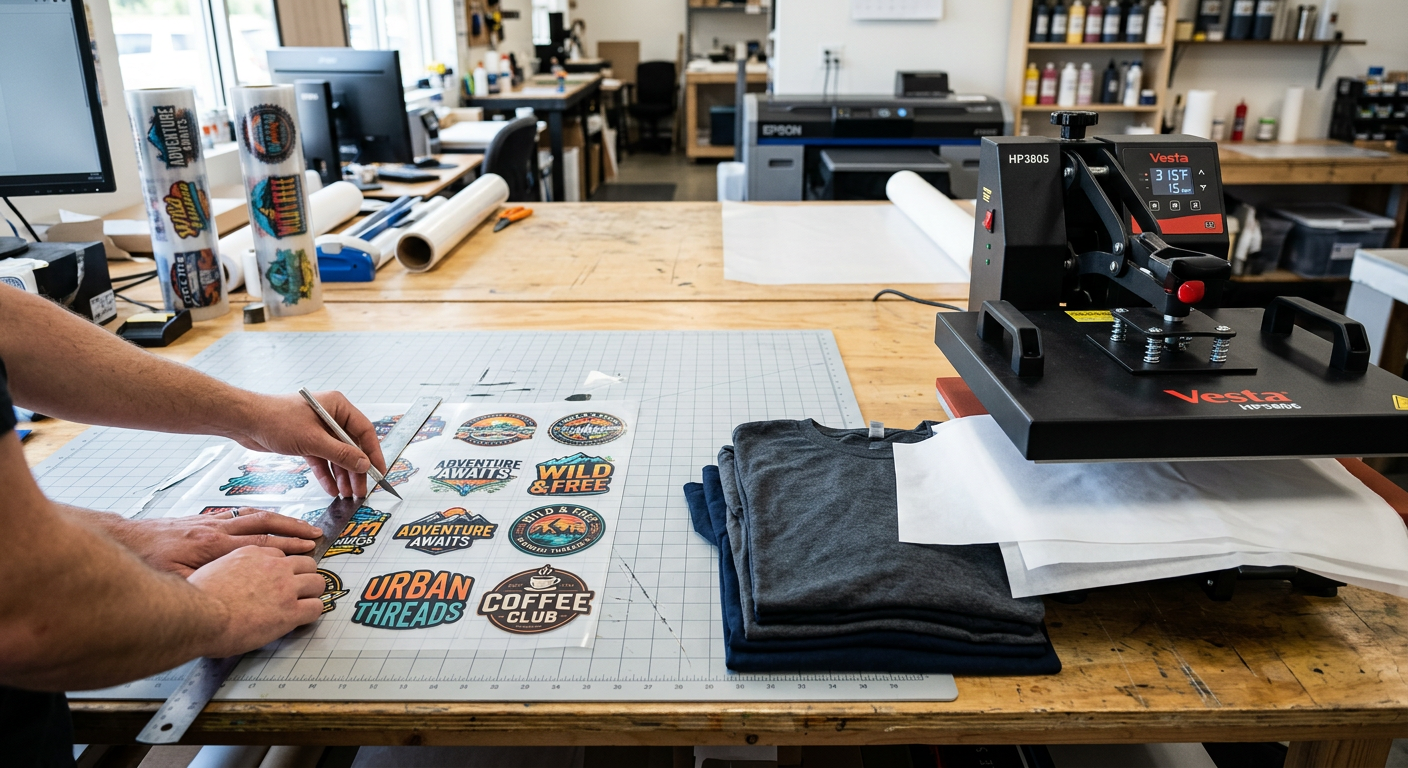
How to Press DTF Gang Sheets the Right Way
1. Pre-Press the Garment
Start by pressing the garment for 5 to 10 seconds to remove moisture and wrinkles. This step helps the adhesive bond more evenly and gives you a smoother final finish.
A flat, dry surface is especially important on hoodies and thicker garments. If the fabric has moisture in it, the transfer can release unevenly or look cloudy.
2. Position the Transfer Carefully
Place the design exactly where you want it before applying heat. Use a ruler, collar guide, or visual alignment point if you need consistent placement across multiple shirts.
For gang sheets, cut each design cleanly so you can press them one at a time. That gives you more control and helps reduce wasted material.
3. Use the Right Heat and Pressure
Most DTF transfers press well with medium to firm pressure, but always follow the supplier’s recommendation. A common starting point is around 300 to 325 degrees Fahrenheit for 10 to 15 seconds.
Pressure matters just as much as temperature. Too little pressure can leave edges loose, while too much can flatten the garment or affect the finish.
4. Peel at the Correct Time
Some transfers are warm peel, while others are cold peel. This is one of the biggest reasons people get inconsistent results.
If your transfer is designed for a warm peel, remove the film after a short cooldown. If it is cold peel, wait until it cools completely before peeling. When in doubt, follow the product instructions carefully.
5. Re-Press for a Finished Look
After peeling, cover the design with parchment paper or a protective sheet and press again for 5 to 10 seconds. This locks in the print and improves the final look.
That second press can also soften the hand feel and help the design blend better into the fabric. It is one of the easiest ways to get a cleaner, retail-ready result.
Best Practices for Different Fabrics
Cotton
Cotton is one of the easiest fabrics for DTF. It handles heat well and usually gives you a strong, vivid finish.
For tees, crews, and tote bags, cotton is a great choice if you want bold color and durability.
Polyester
Polyester works well too, but you need to be a little more careful with heat. Too much heat can cause fabric issues or unwanted shine.
Use the recommended settings from your transfer supplier and test a sample if you are working on a new blank.
Hoodies and Blends
Thicker garments need longer pre-press time and even pressure across the design area. If the garment has seams, pockets, or zippers nearby, make sure the press surface stays level.
For more product options built for different apparel types, check out DTF Transfers and Glitter DTF Transfers.
Common Pressing Mistakes to Avoid
- Skipping the pre-press
- Using uneven pressure
- Peeling too early or too late
- Pressing on a wrinkled surface
- Forgetting the second press
- Ignoring fabric type
Here’s the thing. Most bad presses are not caused by the transfer. They are caused by rushed setup, bad alignment, or inconsistent heat.
Why Gang Sheets Are a Smart Choice
Gang sheets help you maximize space, reduce cost per design, and speed up production. That makes them ideal for small businesses, local pickup orders, and nationwide e-commerce fulfillment.
If you are selling branded merch, event shirts, or custom apparel, gang sheets let you stay flexible without ordering huge quantities. That is why so many print shops rely on them for fast, no-minimum production.
FAQ
How hot should I press DTF gang sheets?
A common starting range is 300 to 325 degrees Fahrenheit, but always check the recommended settings from your transfer provider. Pressure and peel type matter just as much as temperature.
Can I press DTF transfers on polyester?
Yes, DTF works on polyester, cotton, and blends. Just be careful with heat settings on synthetic fabrics to avoid shine or distortion.
Do I need to cut each design from a gang sheet?
Yes, cutting each design cleanly gives you better placement control and helps prevent accidental damage to nearby artwork.
Should I pre-press every shirt?
Yes, pre-pressing removes moisture and wrinkles, which improves adhesion and gives you a better final result.
Why is my transfer not peeling cleanly?
It may be too hot, too cold, or peeled at the wrong time. Check whether the transfer is meant for warm peel or cold peel.
Can I press over seams or pockets?
It is possible, but not ideal. Uneven surfaces can reduce pressure and affect adhesion, especially on thicker garments.
Where can I order press-ready gang sheets fast?
If you need fast turnaround and local service, check out DTF Transfers or contact the team through the Contact page.
Ready to Print Smarter?
If you want press-ready results without the guesswork, order transfers that are built for speed, color, and consistency. Five Star DTF offers same-day printing, local pickup in Tempe, and fast nationwide shipping for creators who need reliable results.
Order online: https://fivestardtf.com/product/dtf-transfers/
📍 Local pickup: 305 S Rockford Dr Ste B, Tempe, AZ 85281
Conclusion
Learning how to press gang sheets is about building a repeatable system. Once you get the heat, pressure, timing, and peel method right, your presses become faster, cleaner, and more profitable.
Whether you are producing shirts for a local brand or shipping nationwide, a solid DTF process helps you deliver professional results every time.
About Five Star DTF
Five Star DTF is Arizona’s leading provider of
DTF transfers, Glitter DTF prints, UV DTF stickers,
and Sublimation transfers — offering same-day printing, fast nationwide shipping,
and convenient local pickup in Tempe, Arizona.
We proudly serve Tempe, Scottsdale, Phoenix, Mesa, Gilbert, Chandler, and all of Arizona,
helping creators, apparel brands, small businesses, and print shops produce premium, press-ready transfers with
vivid color, soft stretch, and long-lasting durability.
There are no setup fees, no minimum orders, and turnarounds are always fast.
Our Top Products
- DTF Transfers
- Glitter DTF Transfers
- UV DTF Stickers
- Sublimation Transfers
- Press Instructions & Tips
- Contact & Local Pickup
Artwork Help
Need your artwork cleaned, fixed, resized, or made print-ready? We offer background removal, vectorizing, color correction, and gang sheet layout.
Ready to Print?
Order DTF Transfers or
Upload Your Artwork to get started today.
All orders over $100 ship free — printed in Tempe, AZ and shipped statewide and nationwide.