
A great shirt design should not force you into a huge order, a pile of vinyl scraps, or a complicated production setup. For small apparel businesses, Etsy sellers, print shops, and creators, what is direct-to-film printing comes down to one practical answer: it is a press-ready way to put vivid, full-color artwork onto garments without printing directly onto the shirt first.
We print the design onto a coated transfer film, apply adhesive powder, cure it, and use a heat press to bond the finished graphic to fabric. That workflow makes it possible to produce custom T-shirts, hoodies, uniforms, tote bags, and more with detailed artwork, strong color, and flexible short-run ordering.
What Direct-to-Film Printing Means
Direct-to-film printing, commonly called DTF printing, is a digital garment-decoration process. The artwork is printed on specialized film rather than directly on fabric, then heat-applied to the final garment.
The finished transfer contains the color artwork, a white ink layer for opacity, and heat-activated adhesive. Once you press and peel it according to the film instructions, the design stays on the garment as a durable printed layer. LexJet summarizes the practical distinction clearly: “DTF is for fabrics, UV-DTF is for hard goods.” (cdn.lexjet.com)
| Method | Best For | Setup Needs | Color Capability |
|---|---|---|---|
| DTF printing | Cotton, polyester, blends | Heat press | Full color and fine detail |
| Screen printing | Larger repeat runs | Screens and setup | Strong spot colors |
| HTV vinyl | Simple names and shapes | Cutter and weeding | Limited for detailed art |
| UV DTF | Tumblers and hard goods | Peel-and-apply | Full-color decals |
For apparel decorators, the biggest advantage is flexibility. You can run a one-off sample, a dozen team shirts, or a larger merch drop without needing to create a screen for every color in the artwork.
How the DTF Printing Process Works
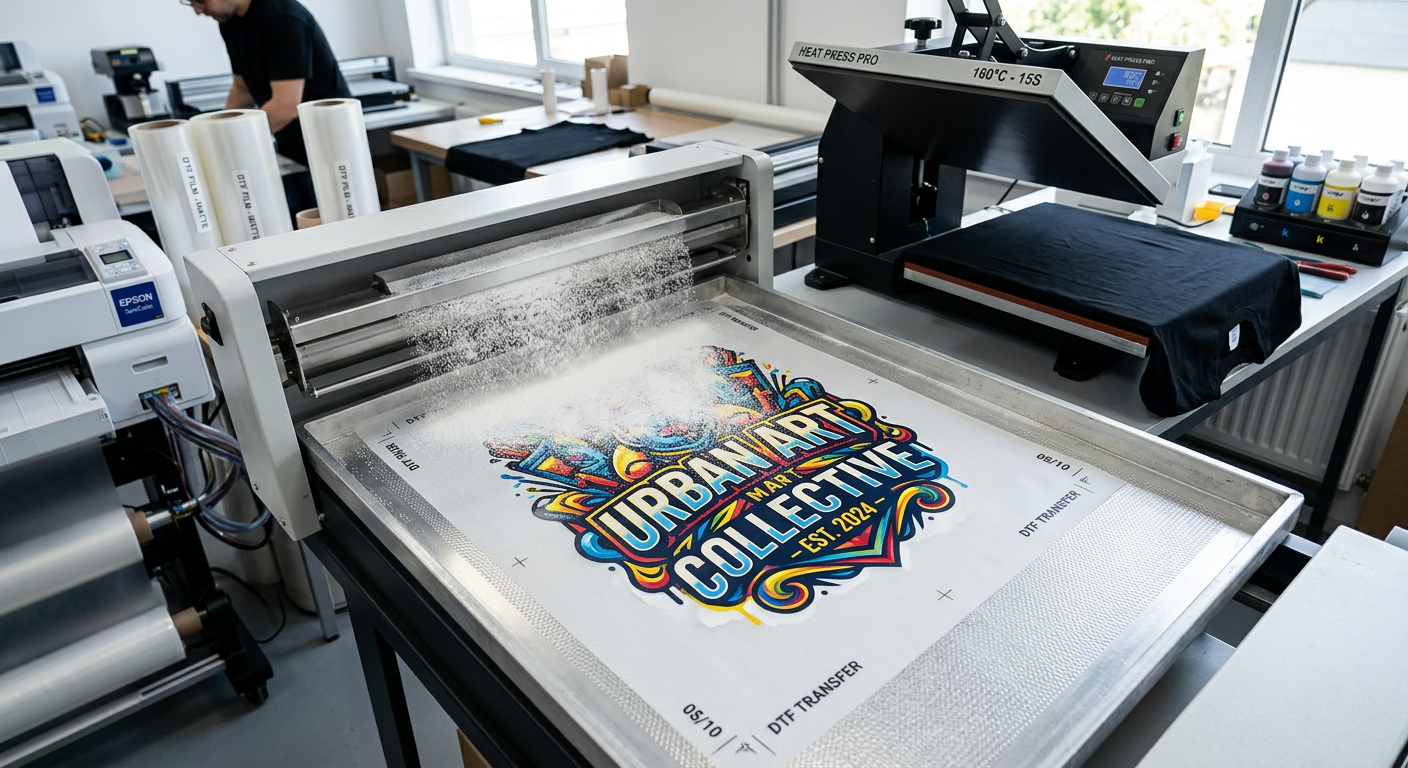
The DTF workflow follows a repeatable production sequence: prepare the art, print on film, add adhesive powder, cure the transfer, then heat press it onto fabric. Each stage affects the sharpness, color, stretch, and wash durability of the finished garment.
1. We Prepare Print-Ready Artwork
We start with high-resolution artwork sized for the placement you want. Transparent PNG files are common, while vector artwork can be ideal for clean logos and sharp edges. Low-resolution screenshots, fuzzy outlines, and accidental background boxes can show up in the finished print, so file quality matters before production begins.
For large designs, we recommend using a file with enough pixels to hold detail at the final print size. Our artwork preparation services can help with background removal, vectorizing, color cleanup, and gang sheet layout when a file needs work before it reaches the press.
2. We Print Color and White Ink on Film
A DTF printer lays down the CMYK artwork on coated transfer film, then adds white ink behind the color. That white layer is why a bright graphic can stand out on a black hoodie, a red team jersey, or a dark cotton tee.
Unlike basic vinyl, DTF can reproduce gradients, small lettering, illustrated artwork, and photographic color blends in one transfer. The film carries the design until you are ready to press it on demand.
3. Adhesive Powder Is Applied and Cured
While the ink is still wet, we coat the printed area with heat-activated adhesive powder. The powder sticks only where there is ink, then curing melts and stabilizes that adhesive into a finished transfer.
This is not a step to rush. Uneven powder, incomplete curing, or stray adhesive outside the artwork can affect the final result. The established DTF workflow is print, powder, cure, heat press, and peel. (cdn.lexjet.com)
4. You Heat Press, Peel, and Finish the Garment
Once the transfer is cured, it is ready for the garment. Place it on a flat, lint-free surface, press with the temperature, time, and pressure specified for the transfer, peel at the recommended stage, then complete a finishing press if required.
For standard DTF transfers, Five Star DTF lists a starting range of 300 to 325°F for 10 to 15 seconds, followed by the appropriate peel and repress process. Always follow the instructions for the specific film and garment, because fabric type and transfer finish can change the right settings. (fivestardtf.com)
Why DTF Works So Well for Small Apparel Brands
DTF is especially useful when your orders are varied, your artwork is full color, or your customers need quick custom pieces. It lets us print transfers ahead of time so you can press garments as orders arrive.
For a small business, that means less inventory risk. Instead of ordering 50 printed shirts in one color and hoping they sell, you can keep blank garments on hand and press a design when a customer buys. It is a strong workflow for event shirts, spirit wear, boutique drops, staff uniforms, creator merchandise, and Etsy orders.
DTF also reduces production friction. There are no screens to expose and no vinyl shapes to weed for complex full-color art. It is not automatically the best method for every job, but it is a reliable fit for short runs, mixed garment colors, and detailed designs.
DTF, Screen Printing, and Vinyl: Choosing the Right Fit
The best decoration method depends on your order volume, artwork style, garment type, and production schedule. We recommend choosing the workflow that protects your margin and meets the customer’s expectations, not simply the method you have used before.
When DTF Is the Better Choice
DTF is a strong choice for full-color art, multi-color logos, gradients, small runs, and mixed orders. It also works across cotton, polyester, blends, nylon, canvas, and many other compatible fabrics, making it practical when one order includes several garment types. (fivestardtf.com)
It is especially effective when you need a transfer supplier rather than another machine to maintain. You upload artwork, receive ready-to-press transfers, and keep your production focused on pressing, packing, and selling.
When Screen Printing May Make More Sense
Screen printing can be a smart choice for high-volume orders using simple artwork and repeat colors. Once the screens are prepared, it can be efficient for hundreds of identical prints.
The tradeoff is setup. Every ink color usually adds more separation and screen work, so low-volume or frequently changing designs can become less efficient. DTF removes much of that upfront setup for smaller, color-rich jobs.
When HTV Still Has a Place
Heat-transfer vinyl remains useful for simple names, numbers, and single-color lettering. It can be a dependable solution for personalized jerseys or basic text designs.
For complex graphics, however, vinyl can require extensive cutting, weeding, and layering. DTF is usually faster when the artwork includes color transitions, tiny details, or many design elements.
DTF Is Not the Same as UV DTF
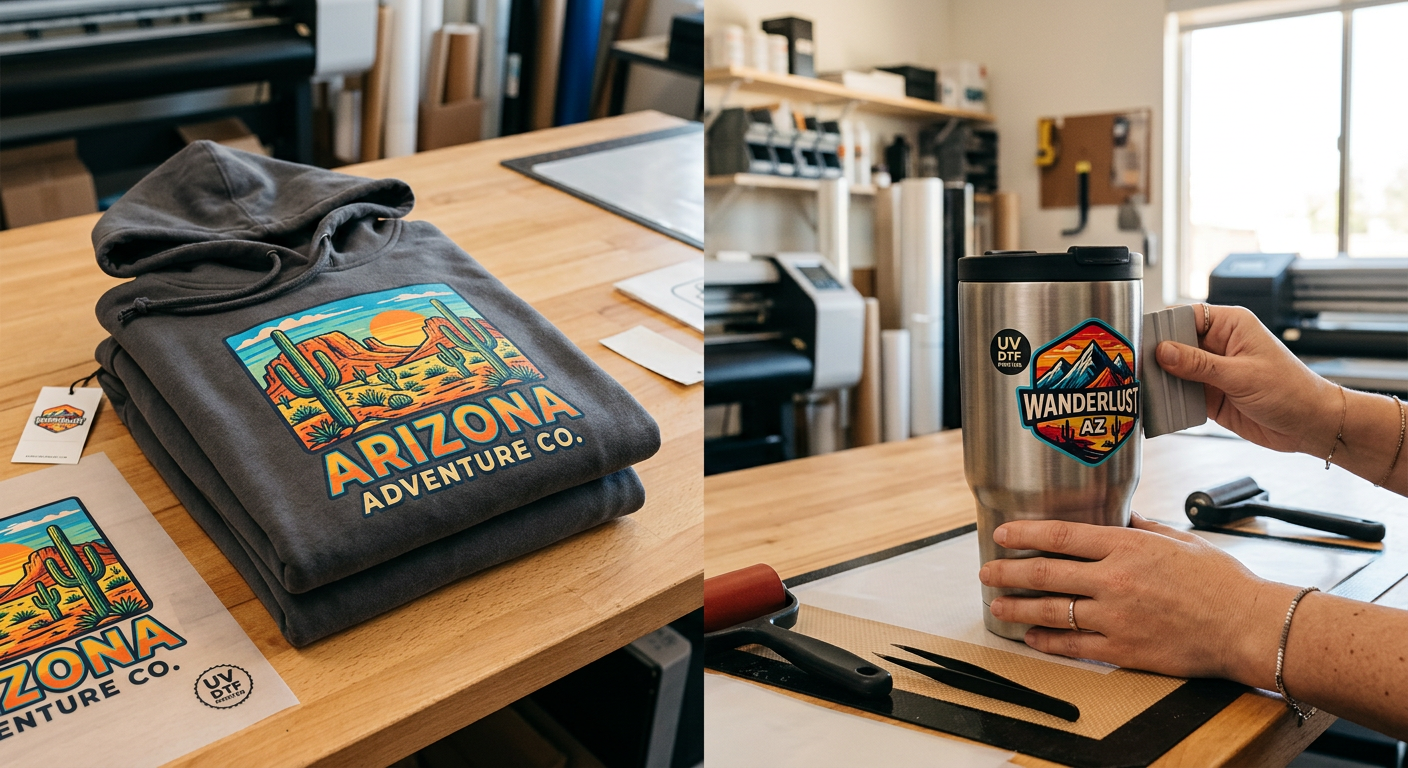
DTF and UV DTF use film, but they solve different production problems. Standard direct-to-film transfers are made for fabric and require heat pressing. UV DTF stickers are made for smooth, hard surfaces and are applied by peeling and pressing, with no heat press required.
Use standard DTF for shirts, hoodies, tote bags, and other textiles. Use UV DTF stickers for custom drinkware and hard goods when you need branded tumblers, glassware, bottles, packaging, phone cases, or promotional items. UV DTF uses UV-cured ink and is designed for rigid, non-porous surfaces rather than garment fabric. (fivestardtf.com)
Pressing Tips That Protect Print Quality
A dependable press routine prevents the common problems that cause lifting corners, poor adhesion, or a rough finish. The right temperature is important, but flat pressure and garment preparation matter just as much.
Pre-Press the Garment
Use a short pre-press to remove moisture and flatten wrinkles in the print area. This gives the transfer a cleaner surface and helps keep seams, pockets, and fabric texture from interfering with pressure.
Use Real, Even Pressure
A household iron creates uneven heat and pressure, which is why it is not the best tool for professional apparel work. A quality heat press gives you consistent contact across the whole design, especially for larger prints.
Follow the Film-Specific Peel Instructions
Some transfers peel warm, while others require a cold peel. Pulling film too early can lift details. Let the transfer cool when instructed, peel slowly, and look closely at fine lines before moving to the finishing press.
Do the Finishing Press
A final press with parchment or a protective sheet can improve the feel and set the transfer surface. It also gives you a final chance to inspect the graphic before the garment is folded for delivery.
For specialty sparkle effects, use product-specific instructions. Our Glitter DTF transfers are cold peel and use a 320°F finishing press for 15 seconds after application, creating a durable, high-impact shimmer for boutiques, dance teams, and spirit wear. (fivestardtf.com)
Why Fast Transfer Turnaround Changes Your Workflow
Fast production gives apparel businesses a better way to respond to demand. When an event gets added, a school needs shirts, or a customer wants a last-minute merch drop, you need transfers that do not hold up the entire order.
Five Star DTF is Arizona’s go-to DTF print shop for small businesses, Etsy sellers, apparel creators, and local print shops that need premium transfers quickly. We offer same-day printing and shipping for qualifying orders, no minimums, free shipping over $100, and local pickup in Tempe, Arizona. Most orders print and ship within 24 hours, with many Arizona orders placed before 1 PM MST handled the same day. (fivestardtf.com)
Summary
Direct-to-film printing is a fabric-decoration process that turns digital artwork into a ready-to-press transfer. It combines full-color printing, white ink, adhesive powder, curing, and a heat press to create durable graphics for cotton, polyester, blends, and many other textiles.
For apparel sellers, the value is simple: you can offer more colors, more garment options, and smaller custom runs without taking on the screen setup or vinyl-weeding workload that slows production down.
Questions We Hear From New DTF Users
Can I use direct-to-film printing on 100% cotton shirts?
Yes. DTF is well suited to 100% cotton shirts, and it also works on polyester and blended fabrics. The key is using the appropriate heat press settings for the transfer and garment.
Does DTF work on dark garments?
Yes. The white ink layer behind the color design helps artwork remain visible and vibrant on dark fabric. This makes DTF a practical choice for black tees, navy hoodies, and dark uniforms.
Do I need to own a DTF printer to sell DTF shirts?
No. Many successful decorators outsource the transfer production and use their own heat press for final application. This avoids printer maintenance, ink management, powder handling, and curing equipment while keeping garment production in your hands.
How should customers wash DTF shirts?
Turn the garment inside out, wash in cold water, and avoid harsh bleach. For the longest life, use low heat or hang dry and do not iron directly on the printed design.
Are DTF transfers good for small orders?
Yes. DTF is a strong fit for samples, one-off orders, personalized garments, and limited drops because it does not require the per-color screen setup associated with traditional screen printing. Five Star DTF has no minimum order requirement. (fivestardtf.com)
Can I use DTF transfers on hats?
Yes, but hat pressing requires the right platen and careful placement. Structured panels, seams, curved surfaces, and heat-sensitive materials can affect results, so test your press setup before fulfilling a larger order.
Put Press-Ready Transfers Into Your Production Line
We make it easy to move from artwork to finished apparel without waiting on a long production cycle. Order online at https://fivestardtf.com/product/dtf-transfers/
or pick up locally at 305 S Rockford Dr Ste B, Tempe, AZ 85281.
For reliable DTF printing tips, use our heat press instructions and transfer guidance, then send us your artwork when you are ready. We print in Tempe, ship nationwide, and help you keep custom apparel moving.
Built for Better Apparel Production
Direct-to-film printing is not complicated once you understand the workflow. It is a proven way to convert detailed digital art into vivid, press-ready garment transfers that work across the fabrics your customers already buy.
Use DTF when you need full color, fast setup, flexible quantities, and clean results without a large equipment investment. With solid artwork, consistent heat press settings, and a dependable transfer partner, you can spend less time fighting production problems and more time building a stronger apparel business.
About Five Star DTF
Five Star DTF is Arizona’s leading provider of
DTF transfers, Glitter DTF prints, UV DTF stickers,
and Sublimation transfers — offering same-day printing, fast nationwide shipping,
and convenient local pickup in Tempe, Arizona.
We proudly serve Tempe, Scottsdale, Phoenix, Mesa, Gilbert, Chandler, and all of Arizona,
helping creators, apparel brands, small businesses, and print shops produce premium, press-ready transfers with
vivid color, soft stretch, and long-lasting durability.
There are no setup fees, no minimum orders, and turnarounds are always fast.
Our Top Products
- DTF Transfers
- Glitter DTF Transfers
- UV DTF Stickers
- Sublimation Transfers
- Press Instructions & Tips
- Contact & Local Pickup
Artwork Help
Need your artwork cleaned, fixed, resized, or made print-ready? We offer background removal, vectorizing, color correction, and gang sheet layout.
Ready to Print?
Order DTF Transfers or
Upload Your Artwork to get started today.
All orders over $100 ship free — printed in Tempe, AZ and shipped statewide and nationwide.