

Choosing the wrong decoration method can drain margin before the first shirt ships. For most small apparel brands, Etsy sellers, and print shops, the real question is not which method is universally better. It is which process matches the artwork, order size, deadline, and fabric mix in front of you.
DTF vs screen printing for apparel comes down to flexibility versus production efficiency. DTF is built for detailed, full-color artwork and low quantities. Screen printing shines when you have a large repeat order, stable artwork, and a limited number of ink colors.
The Fast Answer: Match the Method to the Job
DTF is usually the stronger choice for short runs, frequent launches, personalization, and detailed designs. Screen printing is usually the stronger choice for high-volume orders of the same simple design.
| Factor | DTF Transfers | Screen Printing |
|---|---|---|
| Best order size | One-offs to short runs | Large repeat runs |
| Artwork | Photos, gradients, fine detail | Simple spot-color graphics |
| Setup | No screens or separations | Screens and setup per color |
| Fabric range | Cotton, poly, blends, nylon | Broad, depends on ink system |
| Production speed | Fast to order and press | Efficient after setup |
| Feel | Smooth, flexible transfer layer | Varies by ink and print style |
For online apparel sellers, speed matters because launches rarely arrive in perfectly predictable bulk quantities. The U.S. Census Bureau reported that e-commerce represented 16.4% of total U.S. retail sales in the second quarter of 2026, reinforcing why flexible, small-batch fulfillment matters for product-based businesses. U.S. Census Bureau (census.gov)
How DTF and Screen Printing Work
Both methods can create professional apparel, but they get there in very different ways. That difference changes your setup time, artwork options, and production workflow.
DTF Transfer Printing
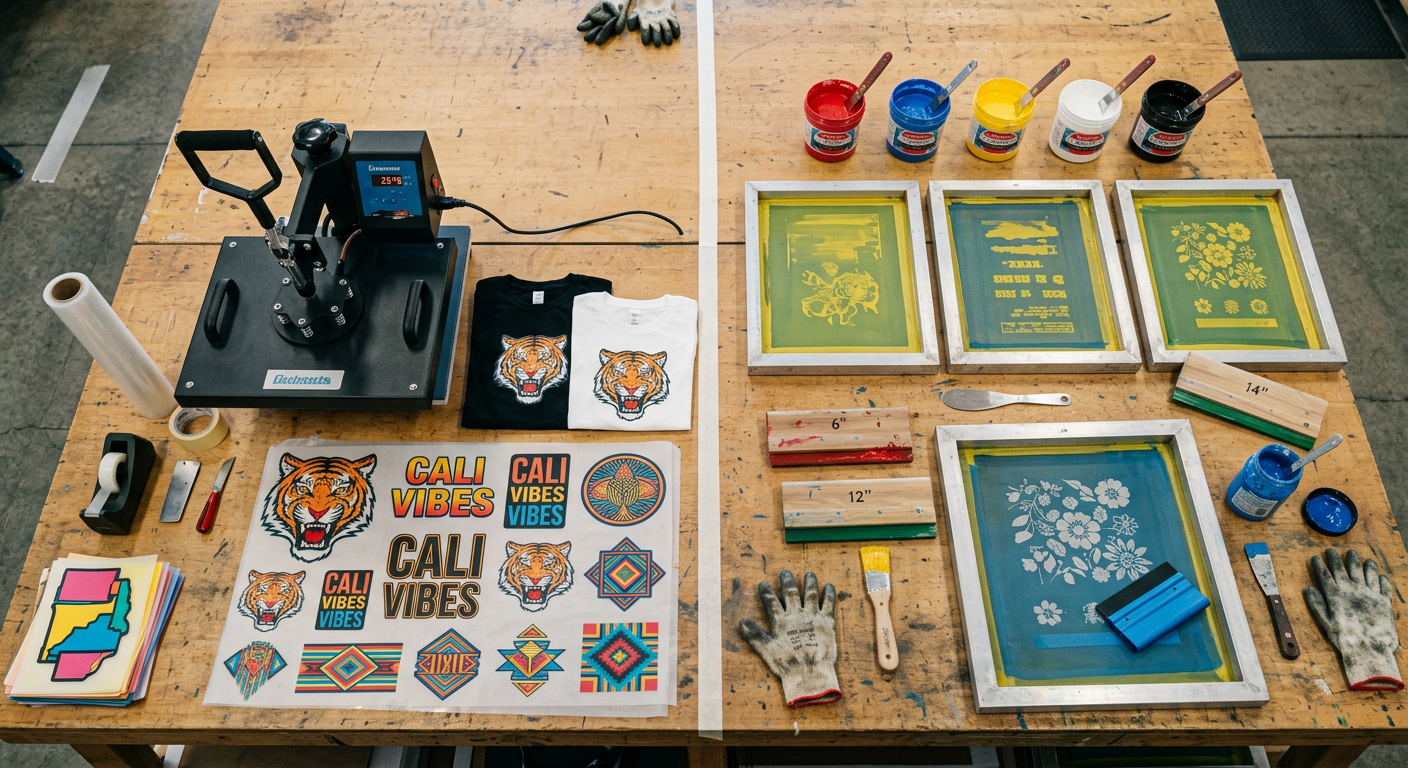
DTF, short for direct-to-film, prints a full-color design onto film, adds adhesive, cures it, and then transfers it to the garment with a heat press. The transfer arrives ready to press, which removes the need to cut and weed vinyl or create a separate screen for each color.
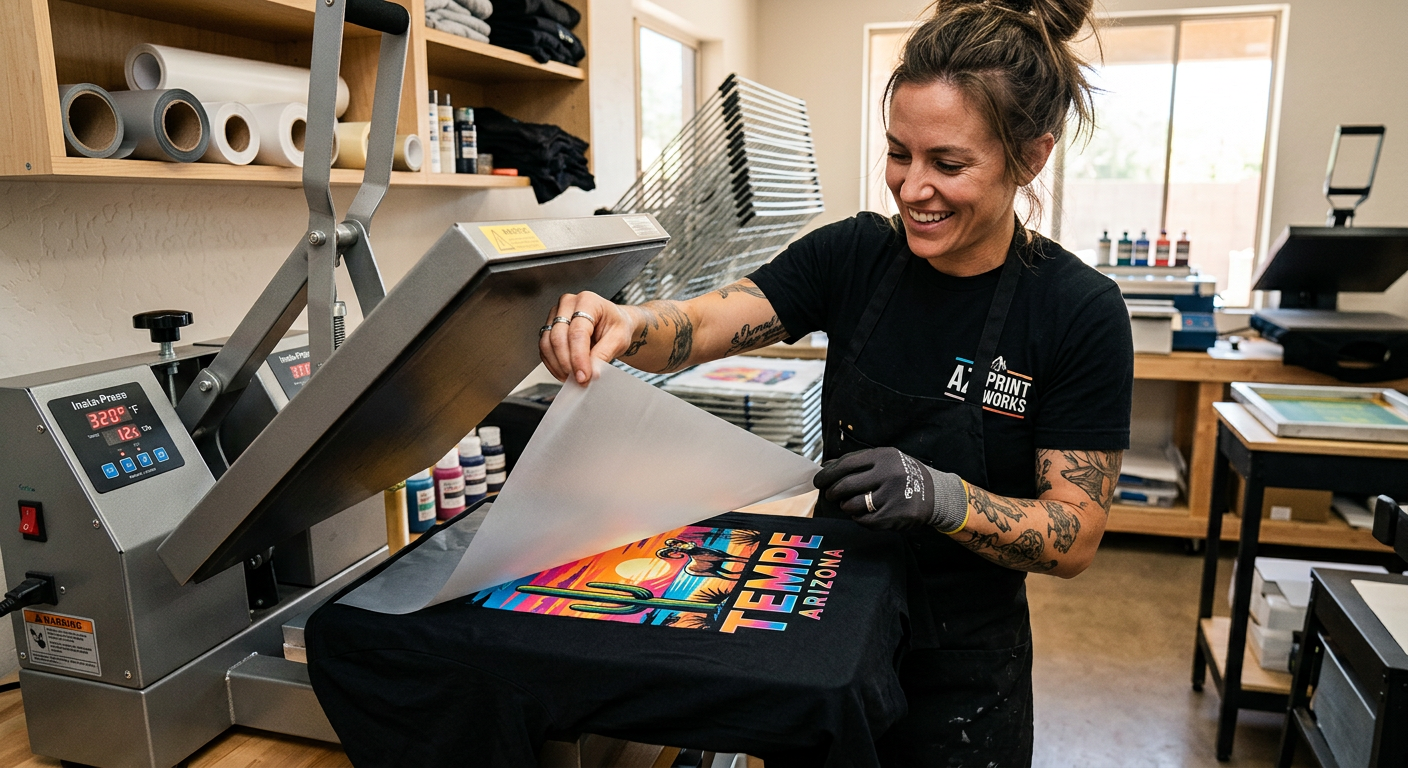
At Five Star DTF, standard transfers are designed for cotton, polyester, blends, nylon, and stretch fabrics. The recommended application range is 300 to 325°F for 10 to 15 seconds with firm pressure, followed by a cold peel. For a more consistent press, use the detailed DTF heat press instructions before running a full job. (fivestardtf.com)
Screen Printing
Screen printing uses mesh screens to place ink directly onto the garment, usually one screen and color at a time. A shop creates screens, prepares color separations, aligns the print, applies ink, and cures the garment.
That setup takes work, but it becomes efficient when the same design repeats across hundreds of shirts. A two-color event tee order with one front logo is often a smart screen-printing job. A twelve-color illustration with gradients, names, and a 24-piece order usually is not.
Cost: Where Each Method Protects Your Margin
The lowest cost method depends on the order, not the process label. Screen printing has a front-loaded setup cost, while DTF keeps setup lighter and makes small quantities easier to price.
When DTF Costs Less
DTF is often the better value when an order includes multiple colors, detailed art, or small quantities. There are no separate screens to build for each ink color, so a full-color logo does not multiply setup work in the same way.
This matters for a Tempe boutique testing six shirt designs, a Mesa team needing individual names, or an Etsy seller fulfilling made-to-order tees. You can order only the transfers you need, press garments as sales come in, and avoid holding a wall of pre-printed inventory.
When Screen Printing Costs Less
Screen printing can win when the artwork is simple and the quantity is high. If a customer wants 300 identical one-color work shirts, the setup cost gets spread across the full run, and production becomes very efficient.
We recommend being direct with customers about this tradeoff. Do not force a 500-piece single-color order into DTF just because it is convenient. Likewise, do not build several screens for a 20-piece full-color drop when the setup will eat the profit.
Artwork and Color: DTF Wins on Complexity
DTF gives creators more freedom with full-color artwork, gradients, photo details, thin lines, and small text. Screen printing can produce excellent graphics, but complex designs need separations, additional screens, tighter registration, and more setup discipline.
A practical rule works well: if your design changes frequently or needs more than a few colors, DTF is usually the cleaner production route. If your design is a bold, repeatable spot-color mark with a confirmed large run, screen printing deserves serious consideration.
For special-event apparel, DTF also opens up finish options without adding a complicated screen workflow. Our Glitter DTF transfers for boutique and spirit wear create full-color shimmer for dance teams, holiday drops, cheer apparel, and youth collections. Glitter DTF is slightly more textured than standard DTF, so it works best when that added visual impact is part of the design plan. (fivestardtf.com)
Fabric Compatibility and Print Feel
DTF offers strong flexibility across cotton, polyester, blends, nylon, and many stretch garments. This makes it useful when one order includes soft cotton tees, performance shirts, fleece hoodies, and mixed-fabric uniforms.
Screen printing is also highly versatile, but the ink system and garment type matter. Water-based ink can create a softer hand on suitable garments, while plastisol can provide opaque, durable color. With either method, test the actual blank before committing to a full run, especially with slick polyester or heavily textured fleece.
The print feel is a fair objection. A premium DTF transfer is a smooth, flexible layer on the garment, while screen printing can feel softer or more integrated depending on the ink, mesh, underbase, and print technique. For large chest graphics, use smart artwork sizing and avoid filling every inch with solid ink if breathability is a priority.
Day 11 Production Decision: Build for the Order You Have
The most profitable print workflow is the one that fits the current order, not the equipment you wish every customer needed. On Day 11 of a recurring content and production plan, we recommend reviewing your last ten jobs and sorting them by quantity, color count, fabric mix, and turnaround pressure.
If most of those jobs were 12 to 48 pieces with varied artwork, DTF likely gives you more control. It supports samples, replacement prints, micro-drops, creator collaborations, and personalized orders without forcing a large minimum. If your order history is filled with 100-plus piece runs of the same two-color design, screen printing may deserve a larger share of your workflow.
A hybrid approach is often the strongest answer. Use screen printing for proven bulk programs, then use DTF for rush additions, name personalization, late orders, detailed art, and smaller follow-up runs. That keeps your shop from turning away work simply because it does not fit one production method.
Fast Turnaround for Arizona Apparel Creators
Fast fulfillment is a competitive advantage when customers need pop-up merch, staff shirts, school apparel, or a product launch without a long production wait. Five Star DTF prints press-ready transfers in Tempe, Arizona, with no minimums, free shipping on orders over $100, and same-day printing and shipping for qualifying orders placed by 1 PM MST. (fivestardtf.com)
We serve Tempe, Phoenix, Mesa, Chandler, Gilbert, Scottsdale, and apparel creators nationwide. Local customers can also use pickup at 305 S Rockford Dr Ste B, Tempe, AZ 85281. For hard-surface branding on drinkware, packaging, glass, and acrylic, use custom UV DTF sticker transfers instead of apparel DTF, since UV DTF is designed for smooth, rigid surfaces rather than shirts. (fivestardtf.com)
Questions We Hear Before Choosing a Print Method
Is DTF durable enough for retail apparel?
Yes, when it is produced well and pressed correctly. Follow the supplier’s temperature, pressure, peel, and post-press instructions, then wash garments inside out in cold water and avoid harsh bleach or high heat.
What order quantity makes screen printing worth it?
There is no universal break point because ink colors, locations, blanks, and setup fees change the math. In general, screen printing becomes more attractive as quantity rises and artwork stays simple, while DTF stays competitive for short-run or complex-color jobs.
Can we use DTF for polyester performance shirts?
Yes, but test first, especially on moisture-wicking or dye-sensitive garments. Use the right temperature and press time for the blank to reduce the chance of dye migration, scorching, or adhesion issues.
Does DTF feel thicker than screen printing?
It can, particularly with large solid-color graphics. A thoughtfully sized design, quality transfer, firm pressure, and a final press help deliver a smoother finish, but a soft-hand screen print may still be the better choice for certain large-coverage fashion prints.
Can we mix DTF and screen printing in one apparel order?
Yes. Many shops use screen printing for the main bulk run and DTF for individual names, last-minute size additions, detailed sleeve art, or small reorders. That mix can reduce waste and preserve speed.
Is screen printing better for one-color logos?
For a large quantity of the exact same one-color logo, usually yes. For a small order, a sample run, or a job with changing names and sizes, DTF may still be more practical.
Order Press-Ready Transfers From Tempe
When your next apparel job needs full color, low quantities, or fast replenishment, we are ready to help. Order DTF transfers online for same-day eligible production, fast nationwide shipping, and free shipping over $100.
Need a hand with files, press settings, or local pickup? Contact Five Star DTF at (602) 909-4592 or visit us at 305 S Rockford Dr Ste B, Tempe, AZ 85281. Printed in Tempe, shipped nationwide. (fivestardtf.com)
Summary
DTF is the practical choice for full-color artwork, short runs, mixed fabrics, quick design changes, and made-to-order apparel. Screen printing is the production powerhouse for large repeat runs with simple, stable artwork.
The strongest shops use both methods with intention. Price the job based on its real production demands, test the blank, and choose the process that protects quality, turnaround, and margin.
Final Takeaway
There is no need to declare one method the winner for every shirt. Build your apparel workflow around the type of orders you want to attract, then use DTF or screen printing where each one performs best.
About Five Star DTF
Five Star DTF is Arizona’s leading provider of
DTF transfers, Glitter DTF prints, UV DTF stickers,
and Sublimation transfers — offering same-day printing, fast nationwide shipping,
and convenient local pickup in Tempe, Arizona.
We proudly serve Tempe, Scottsdale, Phoenix, Mesa, Gilbert, Chandler, and all of Arizona,
helping creators, apparel brands, small businesses, and print shops produce premium, press-ready transfers with
vivid color, soft stretch, and long-lasting durability.
There are no setup fees, no minimum orders, and turnarounds are always fast.
Our Top Products
- DTF Transfers
- Glitter DTF Transfers
- UV DTF Stickers
- Sublimation Transfers
- Press Instructions & Tips
- Contact & Local Pickup
Artwork Help
Need your artwork cleaned, fixed, resized, or made print-ready? We offer background removal, vectorizing, color correction, and gang sheet layout.
Ready to Print?
Order DTF Transfers or
Upload Your Artwork to get started today.
All orders over $100 ship free — printed in Tempe, AZ and shipped statewide and nationwide.