

A custom hoodie can become a best-seller, but only if the print looks sharp, feels flexible, and holds up after repeat washes. Thick fleece, ribbed cuffs, pockets, drawstrings, seams, and zipper areas create more variables than a standard T-shirt. That is why a repeatable press process matters.
For creators building merch drops, Etsy shops, local team apparel, and growing streetwear labels, DTF for hoodies custom orders offer a practical route to full-color artwork without weeding vinyl or limiting designs to polyester blanks. The key is matching the transfer, garment, heat press setup, and finishing process before production starts.
Why Custom Hoodies Need a Different Press Strategy
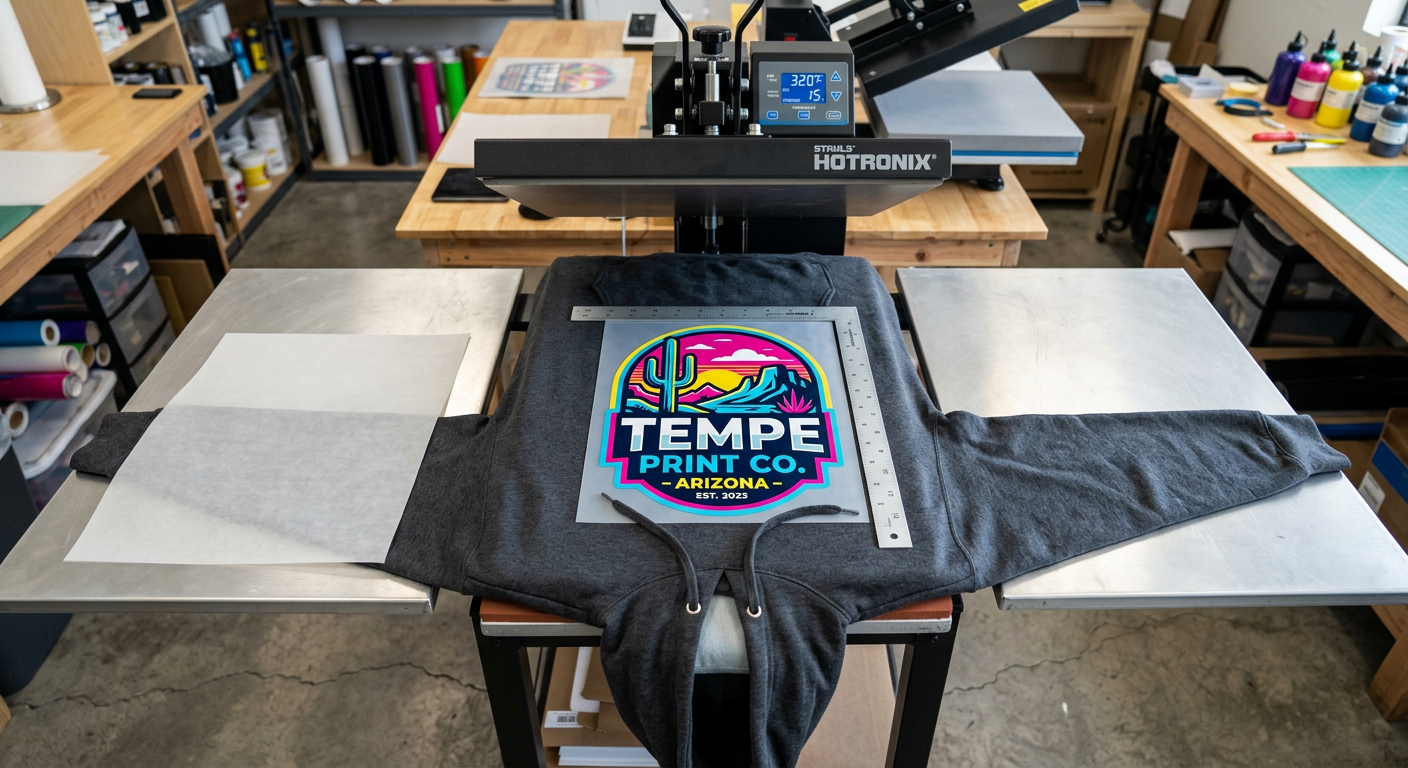
Hoodies hold more moisture and absorb more heat than lightweight tees. The fleece surface can also create uneven pressure, especially around a kangaroo pocket, hood seam, zipper, or thick drawcord area. A transfer can look perfect at peel time and still fail later if the adhesive did not receive even heat and pressure.
Brother specifically notes that hoodie transfers should not be pressed directly over a zipper unless the zipper area is isolated. That small production detail can protect both the garment and your finished artwork. Brother GTX DTF Guide (4352300.fs1.hubspotusercontent-na1.net)
The Hoodie Press Checklist
Before you start a run, confirm these basics:
- Use a calibrated heat press, not a household iron.
- Pre-press the hoodie to remove moisture and flatten the print zone.
- Thread the hoodie onto the lower platen when possible, keeping the back layer off the platen.
- Use a pressing pillow or pad to raise the print area above seams and pockets.
- Keep artwork clear of zippers, heavy seams, and drawcord hardware.
- Test one finished hoodie before pressing an entire order.
Custom DTF Hoodies Compared With Other Decoration Methods
| Method | Best Use | Main Advantage | Watch-Out |
|---|---|---|---|
| DTF transfers | Full-color hoodies and small runs | Detailed art on cotton, blends, and polyester | Press consistency matters |
| HTV vinyl | Simple names and one-color graphics | Easy for basic personalization | Weeding adds labor |
| Sublimation | Light polyester fleece | Soft, dye-based finish | Not suitable for cotton or dark blanks |
| Screen printing | High-volume repeat artwork | Efficient at scale | Setup is less practical for short runs |
DTF is often the strongest fit when your hoodie artwork includes gradients, small type, photographs, multiple colors, or detailed logos. It also keeps small-batch production efficient because you can order only the designs you need instead of committing to screens or hours of vinyl weeding.
For a simple one-color name on a sports hoodie, HTV may still be a sensible choice. For a large repeat order with one or two spot colors, screen printing can deliver strong unit economics. Smart apparel brands choose the method based on artwork, garment, quantity, deadline, and desired finish.
Heat Press Settings for DTF Hoodie Transfers
Every transfer film and press behaves a little differently, so your supplier’s instructions should always lead. As a controlled starting point, Five Star DTF recommends 300 to 325°F, medium-high pressure, and 10 to 15 seconds for its standard DTF transfers, followed by a cold peel and optional post-press. (fivestardtf.com)
A Reliable Starting Workflow
- Pre-press for 5 to 8 seconds. This drives out moisture and flattens the fleece pile. Use a lint roller first if the blank sheds fibers.
- Position the transfer on a flat zone. Center chest placements should sit above the pocket. For left-chest designs, use an alignment guide and keep the art away from thick seams.
- Press with firm, even pressure. A pressing pillow is especially useful for hoodies because it reduces pressure loss caused by seams and pockets.
- Peel according to the transfer instructions. Do not rush the peel. If your film is cold peel, let it cool completely before lifting from one corner in a smooth, steady motion.
- Finish with a post-press. Cover the print with parchment or a suitable finishing sheet and press again for 5 to 10 seconds if your transfer instructions call for it.
Five Star DTF lists 100+ wash durability for properly pressed transfers, which makes testing your settings before a production run worth the extra few minutes. Five Star DTF Transfers (fivestardtf.com)
Cotton, Poly Blends, and Performance Fleece
Cotton and cotton-rich hoodies are generally forgiving and provide a reliable surface for full-color DTF graphics. Polyester and performance fleece need more caution because excessive heat can cause scorching, shine, or dye migration, especially on dark or highly saturated garments.
When working with polyester-heavy fleece, start on the lower end of your approved temperature range, use the correct pressure, and test the exact blank color before production. Keep a settings log with the hoodie brand, fabric blend, temperature, press time, pressure, peel method, and post-press result. That record becomes a major advantage when you need to repeat an order weeks later.
Design Choices That Make Hoodie Prints Look Premium
A hoodie gives you more print real estate, but larger is not always better. Strong placement and clean artwork usually create a more premium result than filling every inch of fabric.
Choose Placement With the Blank in Mind
A full-front design should clear the kangaroo pocket and avoid the hood seam. Center-chest logos should feel intentional, not crowded against the neckline. Back prints need enough space below the hood so the top of the design remains visible when the hoodie is worn.
For brand collections, consider a balanced layout: small left-chest logo, full-back artwork, and a subtle sleeve detail. This approach gives customers a retail-ready hoodie while keeping the main design visible from multiple angles.
Prepare Artwork Before You Order
Use transparent-background PNG, TIFF, EPS, or AI artwork whenever possible. Keep small text bold enough to reproduce cleanly, verify spelling and colors, and confirm the intended print dimensions against the hoodie size range.
If your design needs cleanup, background removal, vectorizing, color correction, or gang sheet layout, use the Five Star DTF artwork requirements before placing the order. Clean files reduce avoidable delays and help you get a sharper final print.
Common Problems With Custom DTF Hoodies
The Transfer Lifts During the Peel
This usually points to insufficient heat, pressure, or dwell time. Re-cover the film, press again using your approved settings, let it cool if required, and peel slowly. Do not keep pulling if part of the design begins lifting.
The Print Has Uneven Edges
Uneven edges often come from seams, pockets, or inconsistent platen pressure. Thread the hoodie, add a pressing pillow, and make sure the print zone is level before the first press.
The Hoodie Has a Shiny Press Box
Too much heat, too much dwell time, or excessive pressure can leave a visible box, particularly on polyester fleece. Lower the heat within the transfer’s approved range, reduce pressure if appropriate, and test a scrap area first.
The Design Feels Too Heavy
Large solid-color artwork naturally has more ink coverage. Consider distressed textures, open areas, halftones, or a smaller print size if a lighter hand feel is important to your collection.
A Fast Production Plan for Small Apparel Brands
The fastest shops do not skip quality control. They standardize it. Create one approved sample for every new blank, photograph the placement, write down the settings, and keep the sample with your production notes.
This process is especially valuable for seasonal hoodie drops, school spirit wear, contractor uniforms, and event merch. When a reorder arrives, you are not guessing. You are repeating a proven setup.
Five Star DTF supports that workflow with press-ready DTF transfers, no minimums, same-day printing and shipping for qualifying orders, free shipping over $100, and local pickup in Tempe. We also offer Glitter DTF Transfers when your hoodie artwork needs extra sparkle, plus UV DTF Stickers for branded packaging, drinkware, and hard-surface add-ons. (fivestardtf.com)
Frequently Asked Questions
Can DTF transfers go on cotton hoodies?
Yes. DTF transfers work well on cotton and cotton-blend hoodies when the garment is pre-pressed, the print area is level, and the recommended heat press settings are followed.
What is the best placement for a full-front hoodie design?
Keep the artwork above the kangaroo pocket and clear of thick seams. Test placement on the smallest hoodie size in your run so the design does not sit too low or crowd the neckline.
Do I need a pressing pillow for hoodie transfers?
A pressing pillow is strongly recommended when pockets, seams, zippers, or thick fleece interfere with even pressure. It helps create a flatter print zone and more consistent adhesion.
Can I use DTF on polyester hoodies?
Yes, but polyester requires a careful test press. Use settings approved for your film and blank, watch for dye migration or shine, and avoid assuming a cotton hoodie recipe will work unchanged.
Should I use a household iron for custom hoodie transfers?
No. A heat press provides the stable temperature and even pressure required for reliable adhesion. Household irons create inconsistent results and are not a good production tool.
How do I make custom hoodie transfers last longer?
Use the correct press settings, complete the recommended post-press, and provide care instructions. Wash hoodies inside out in cold water with mild detergent, then tumble dry low or hang dry.
Summary
The best custom hoodie prints are not created by luck. They come from clean artwork, a quality blank, a flat pressing surface, controlled heat, even pressure, and a quick sample test before production.
For DTF for hoodies custom projects, focus on the details that hoodie fabric changes: moisture, thickness, seams, pockets, and placement. Get those right, and you can produce durable, high-impact apparel that looks ready for a storefront, merch table, or online launch.
Print Custom Hoodies With Confidence
We print premium transfers in Tempe, Arizona, so you can press, pack, and sell without waiting on a complicated production process. Order online for fast turnaround, take advantage of free shipping on orders over $100, or pick up locally when your schedule is tight.
Order custom DTF transfers online
📍 Local pickup: 305 S Rockford Dr Ste B, Tempe, AZ 85281
Need help with a hoodie project or file setup? Contact Five Star DTF for print-shop-smart support.
Built for Better Hoodie Production
Custom hoodie printing gets easier when the process is documented and repeatable. Test your blanks, standardize your placement, track your press settings, and choose transfers that let your artwork do the selling.
Whether you are fulfilling one Etsy order or preparing a full apparel launch, consistent DTF production gives you the flexibility to move quickly without sacrificing print quality. Printed in Tempe, shipped nationwide, and built for creators who expect a professional finish.
About Five Star DTF
Five Star DTF is Arizona’s leading provider of
DTF transfers, Glitter DTF prints, UV DTF stickers,
and Sublimation transfers — offering same-day printing, fast nationwide shipping,
and convenient local pickup in Tempe, Arizona.
We proudly serve Tempe, Scottsdale, Phoenix, Mesa, Gilbert, Chandler, and all of Arizona,
helping creators, apparel brands, small businesses, and print shops produce premium, press-ready transfers with
vivid color, soft stretch, and long-lasting durability.
There are no setup fees, no minimum orders, and turnarounds are always fast.
Our Top Products
- DTF Transfers
- Glitter DTF Transfers
- UV DTF Stickers
- Sublimation Transfers
- Press Instructions & Tips
- Contact & Local Pickup
Artwork Help
Need your artwork cleaned, fixed, resized, or made print-ready? We offer background removal, vectorizing, color correction, and gang sheet layout.
Ready to Print?
Order DTF Transfers or
Upload Your Artwork to get started today.
All orders over $100 ship free — printed in Tempe, AZ and shipped statewide and nationwide.